Enrollment
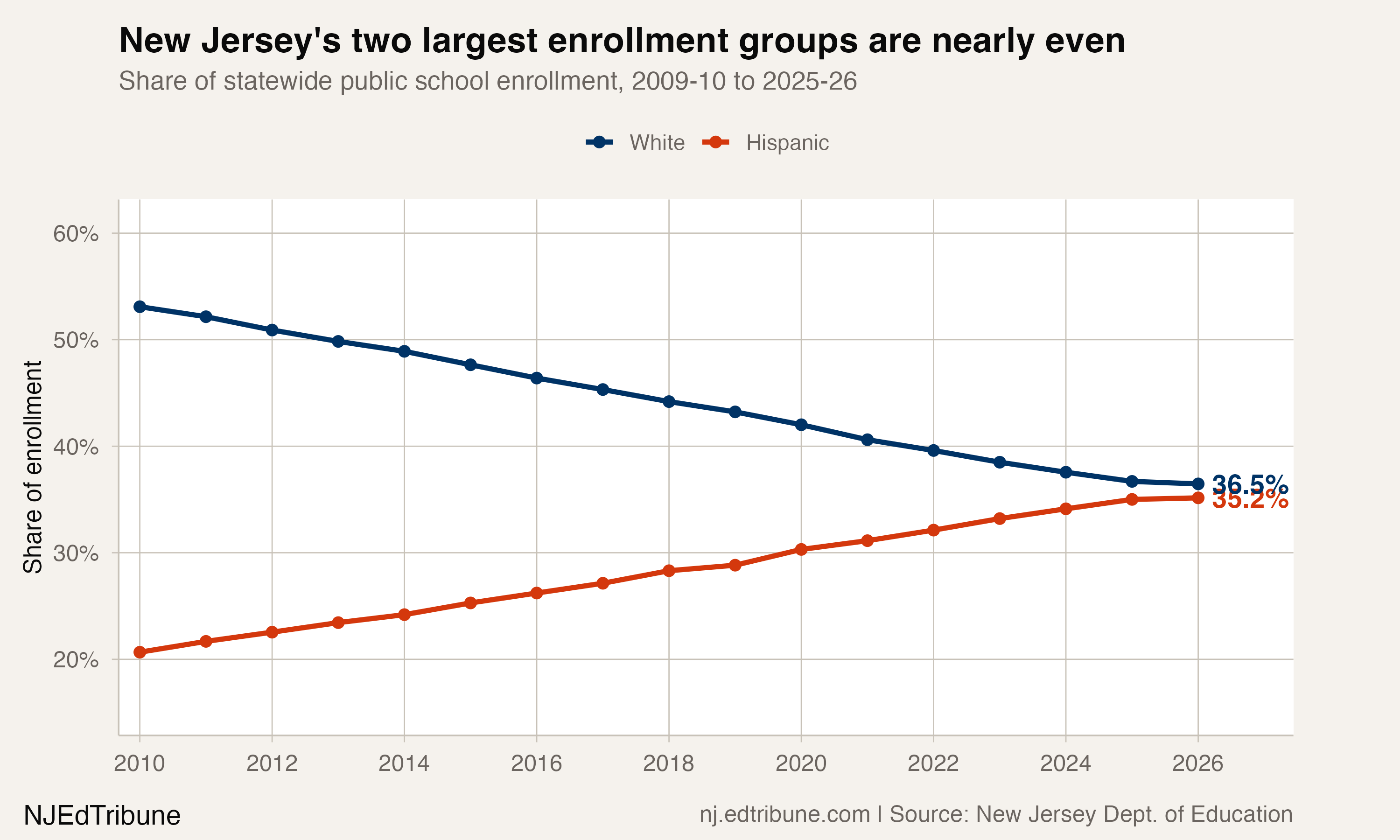
New Jersey's White and Hispanic Enrollment Shares Are 1.3 Points Apart
White students were 36.5% of New Jersey enrollment and Hispanic students were 35.2% in 2025-26, narrowing a once-wide gap.
Data-Driven Education Journalism for the Garden State
Education News & Data
Local education reporting from every corner of New Jersey, grounded in New Jersey Department of Education data.
Lakewood Township enrolled 3,766 public-school students in 2025-26, down 37.6% from its 2016 peak. NJ moved to take over the district in January, citing a structural fiscal mismatch with 50,000-plus yeshiva students.
Camden City School District fell 49.0% from 2010 to 2026, while four current operator districts enroll 9,099 students in the latest file.
Jersey City Public Schools enrolled 27,464 students in 2010 and 25,307 in the fall 2025 file. The 7.9% slide is small in any one year, while Newark next door now enrolls 17,909 more students.
Cresskill's new superintendent puts listening, facilities and transitions first as enrollment rises from a recent low but remains below its peak.
White students were 36.5% of New Jersey enrollment and Hispanic students were 35.2% in 2025-26, narrowing a once-wide gap.
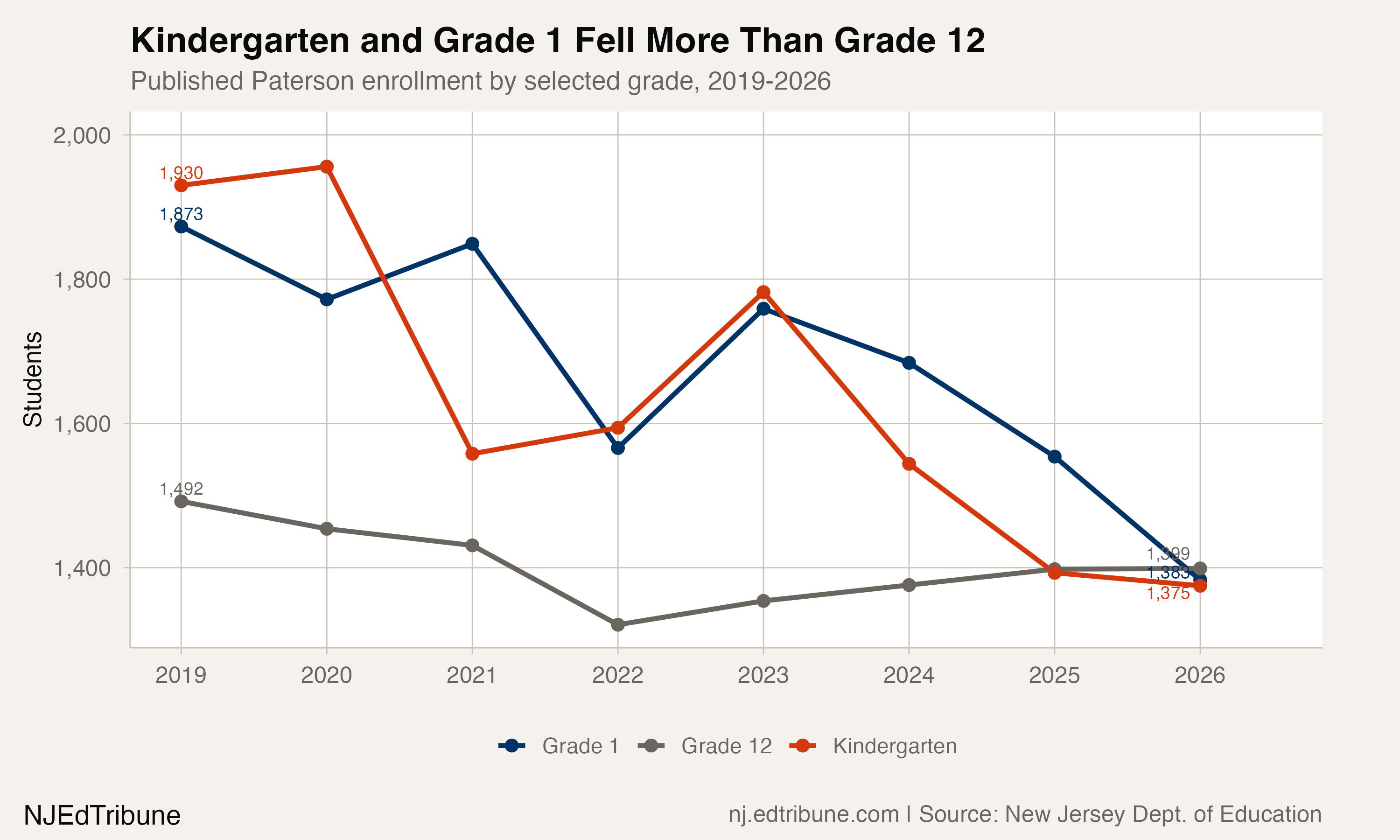
Paterson Public Schools enrolled 26,067 students in 2023 and 21,849 in 2026, a decline of 4,218 students, or 16.2 percent.
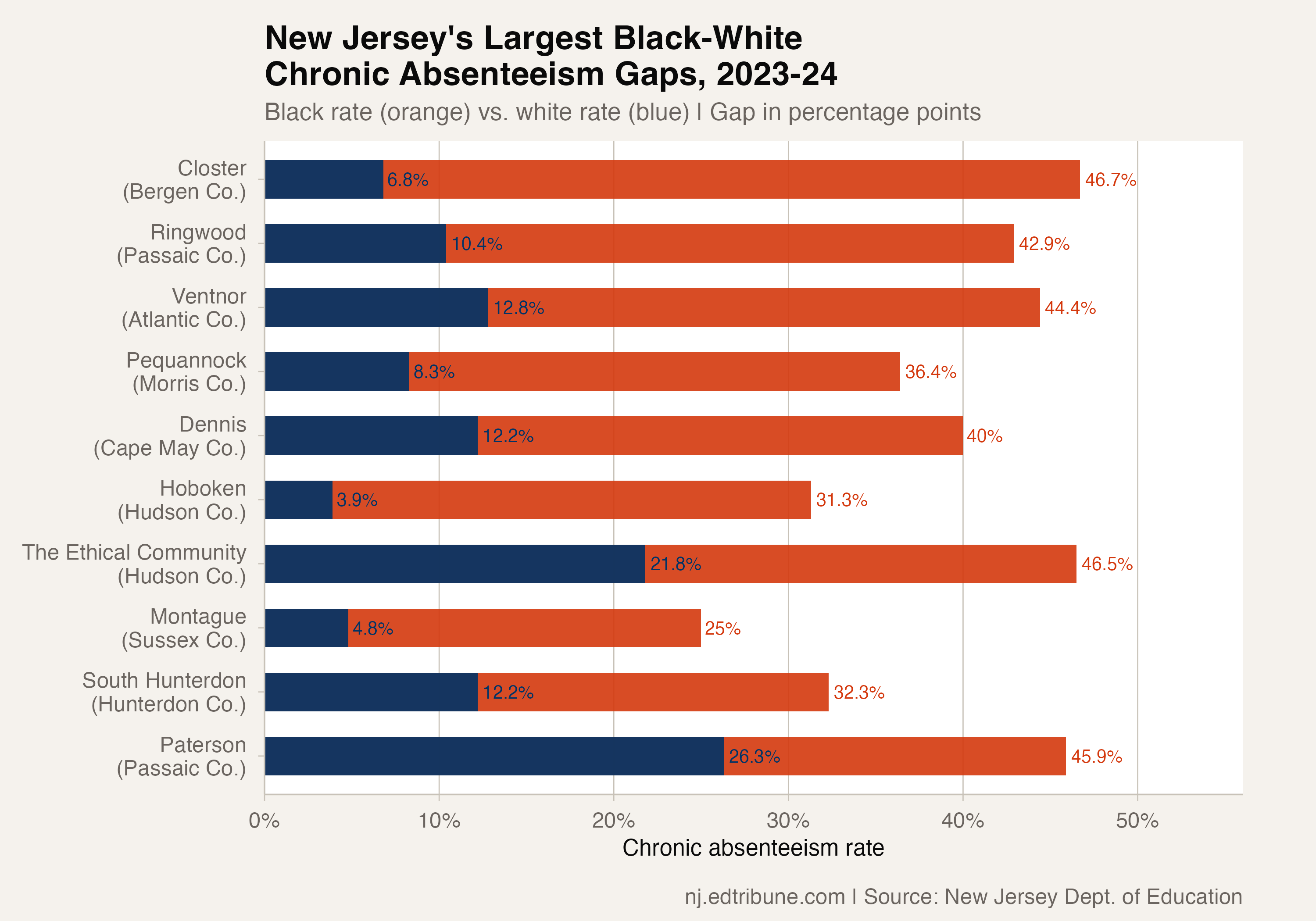
Closter has NJ's largest Black-white chronic absenteeism gap at 39.9 points. Across 9 districts, gaps exceed 20 points.
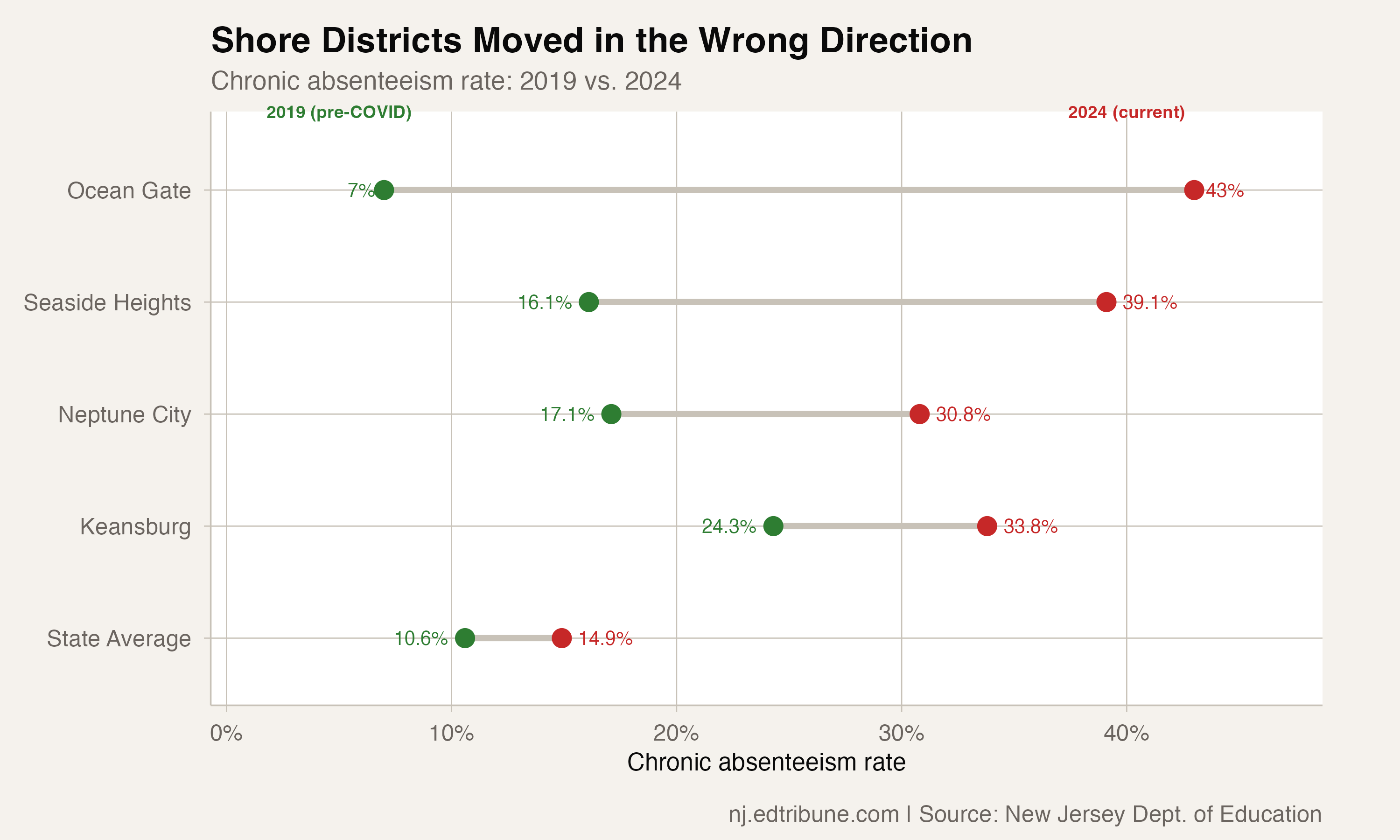
Ocean Gate, Seaside Heights, Keansburg and Neptune City all remained above 30% chronic absenteeism in 2024 while New Jersey's statewide rate fell to 14.9%.
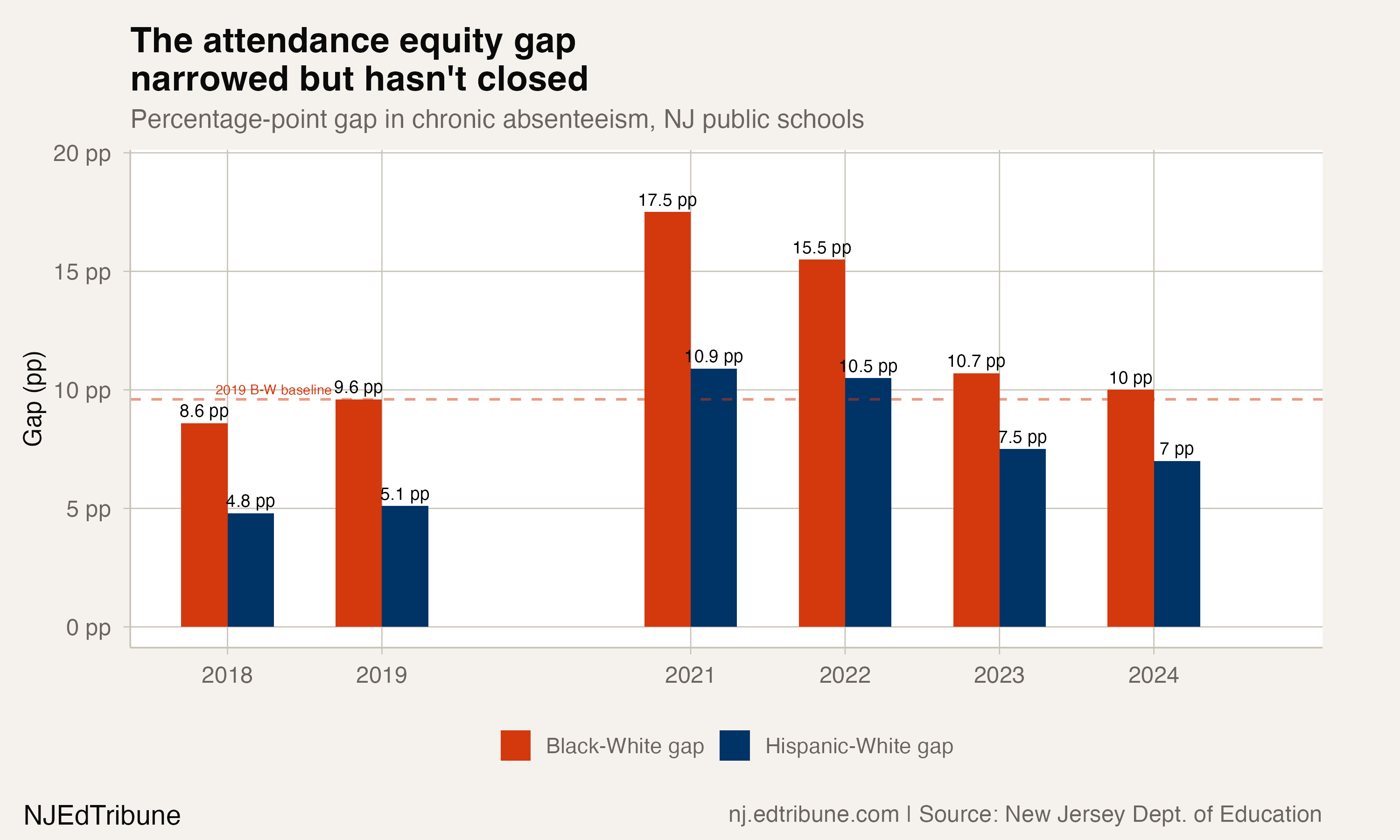
The Black-white chronic absenteeism gap nearly doubled during COVID and has only partially recovered, leaving Black students 10 points behind.
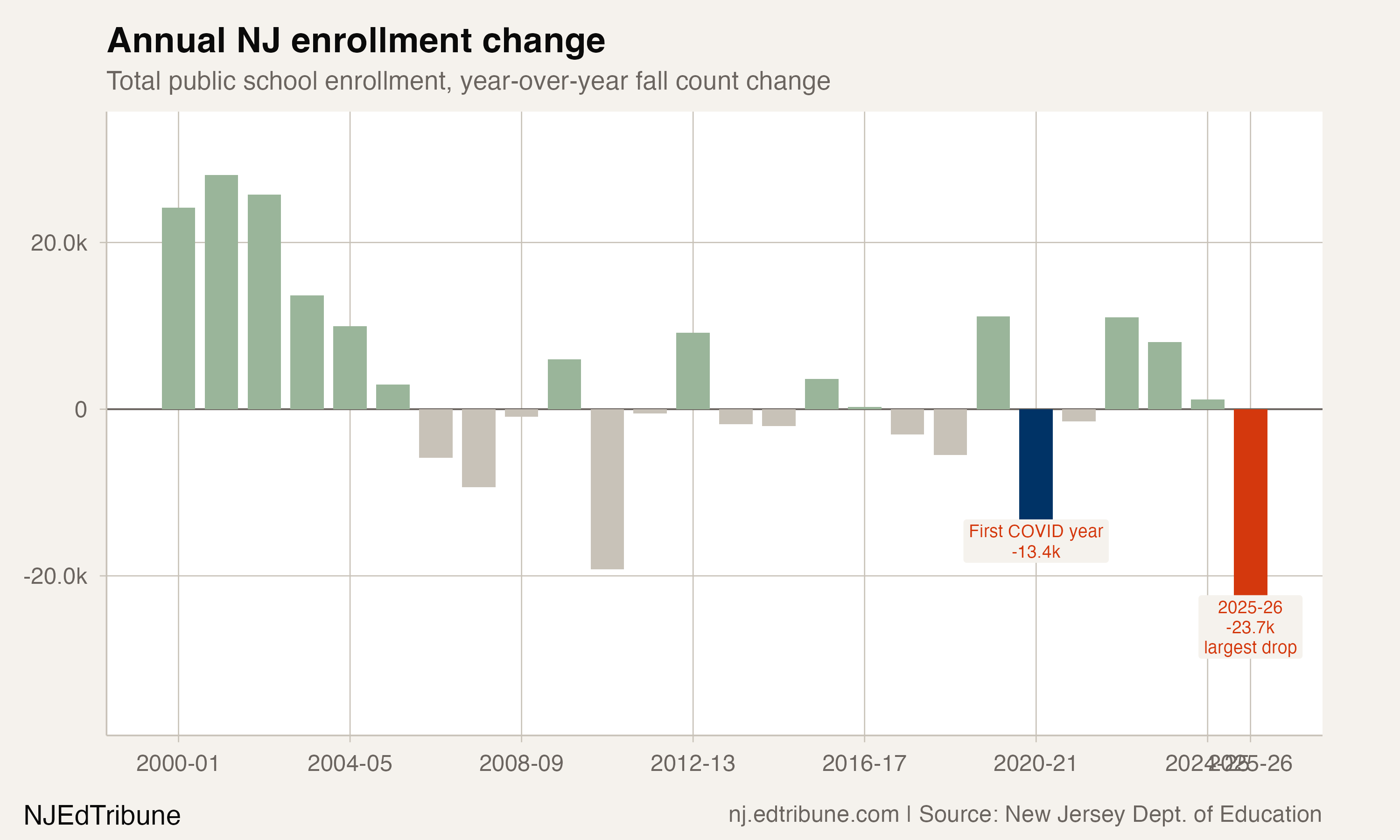
NJ recently released 2025-26 enrollment data. Total enrollment fell 23,732 to 1,357,450, the largest single-year drop in 27 years of state files. K-12 down 24,564. Hispanic and English-learner counts each fell for the first time in over a decade.
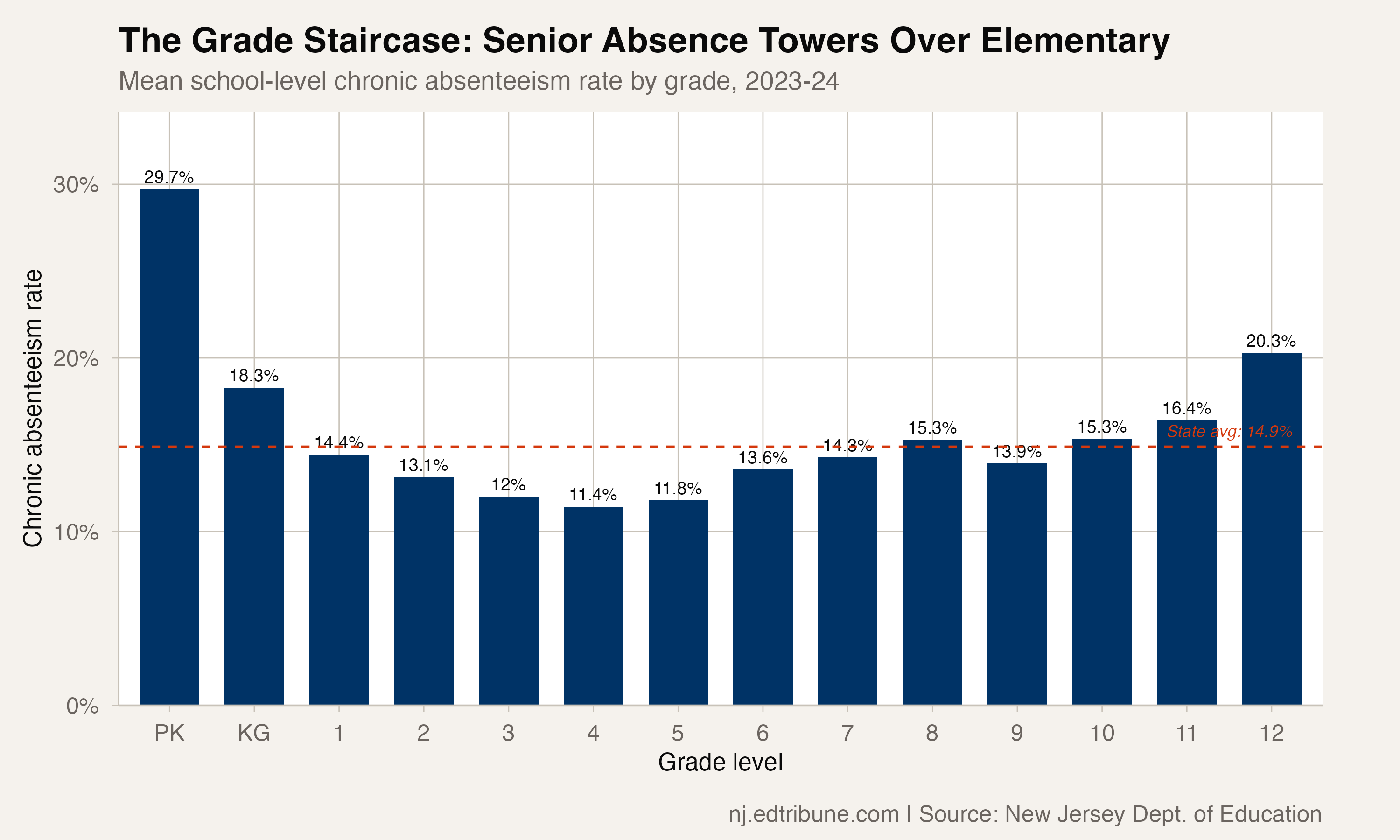
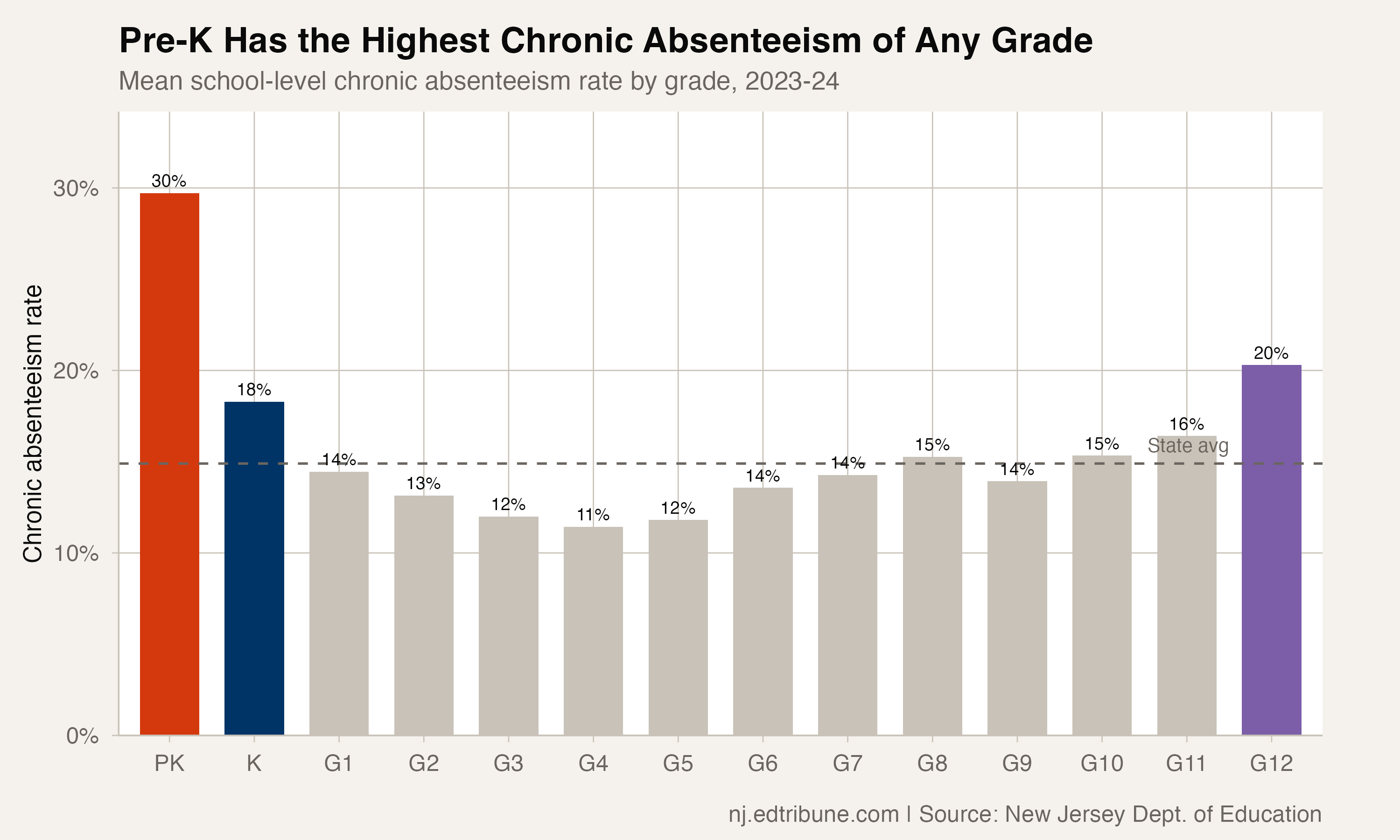
NJ pre-K chronic absenteeism hit 29.7% in 2023-24, double the state average, even as the state expands universal preschool to 80,000 children.
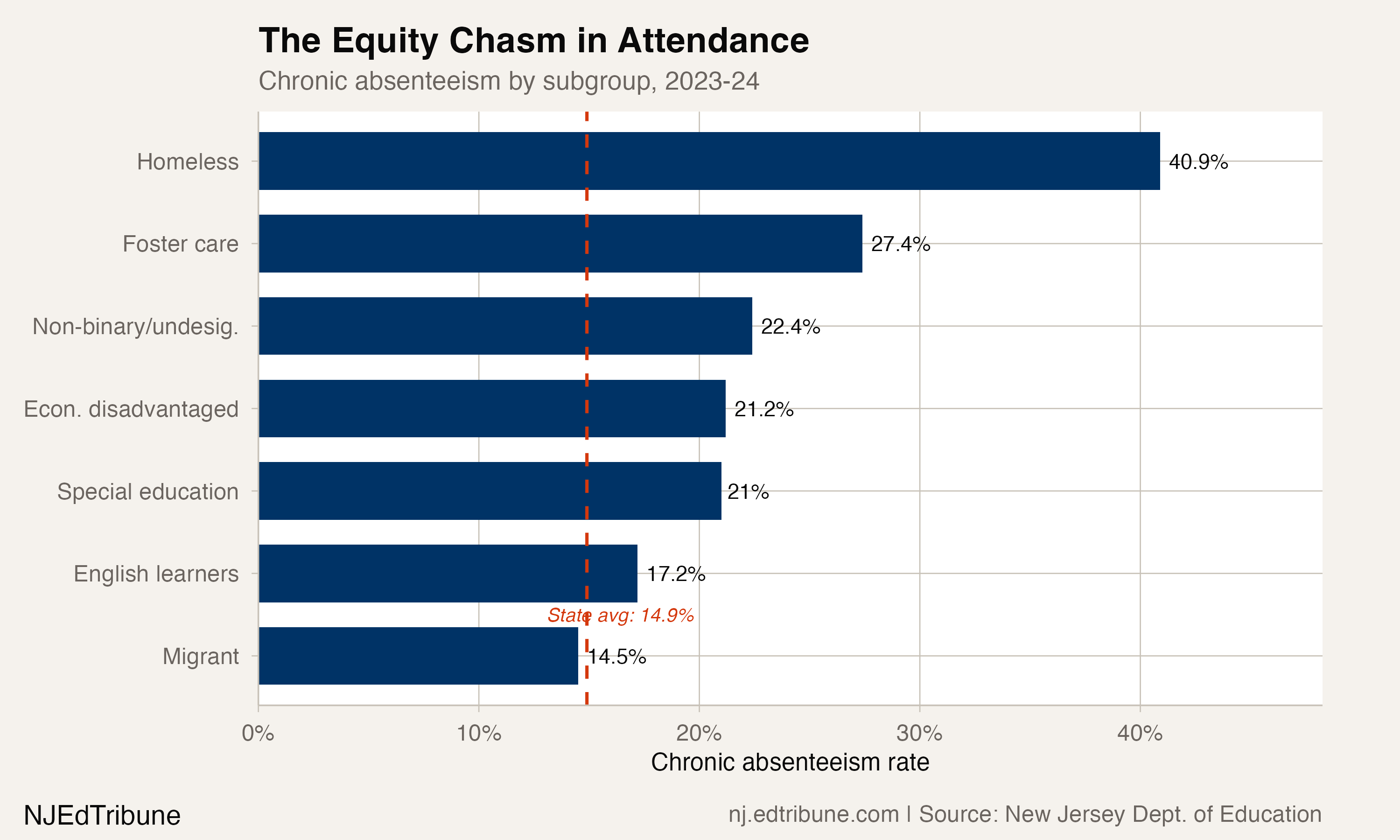
Students who are currently homeless miss school at nearly triple the state average, and the gap has widened since the pandemic despite statewide improvements.
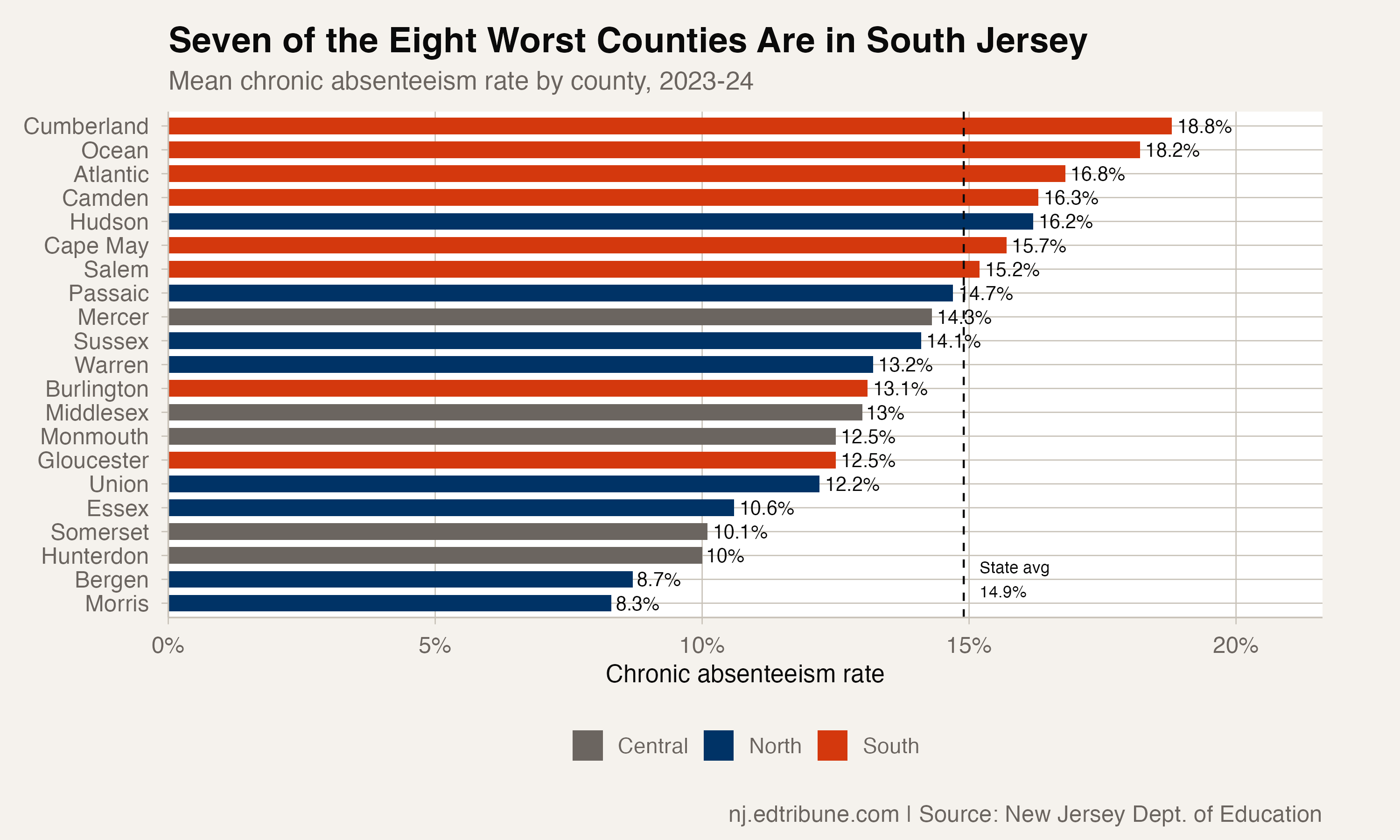
South Jersey districts average 15.6% chronic absenteeism vs 11.1% in the north, a 4.5 pp gap that was only 2.4 pp pre-COVID.
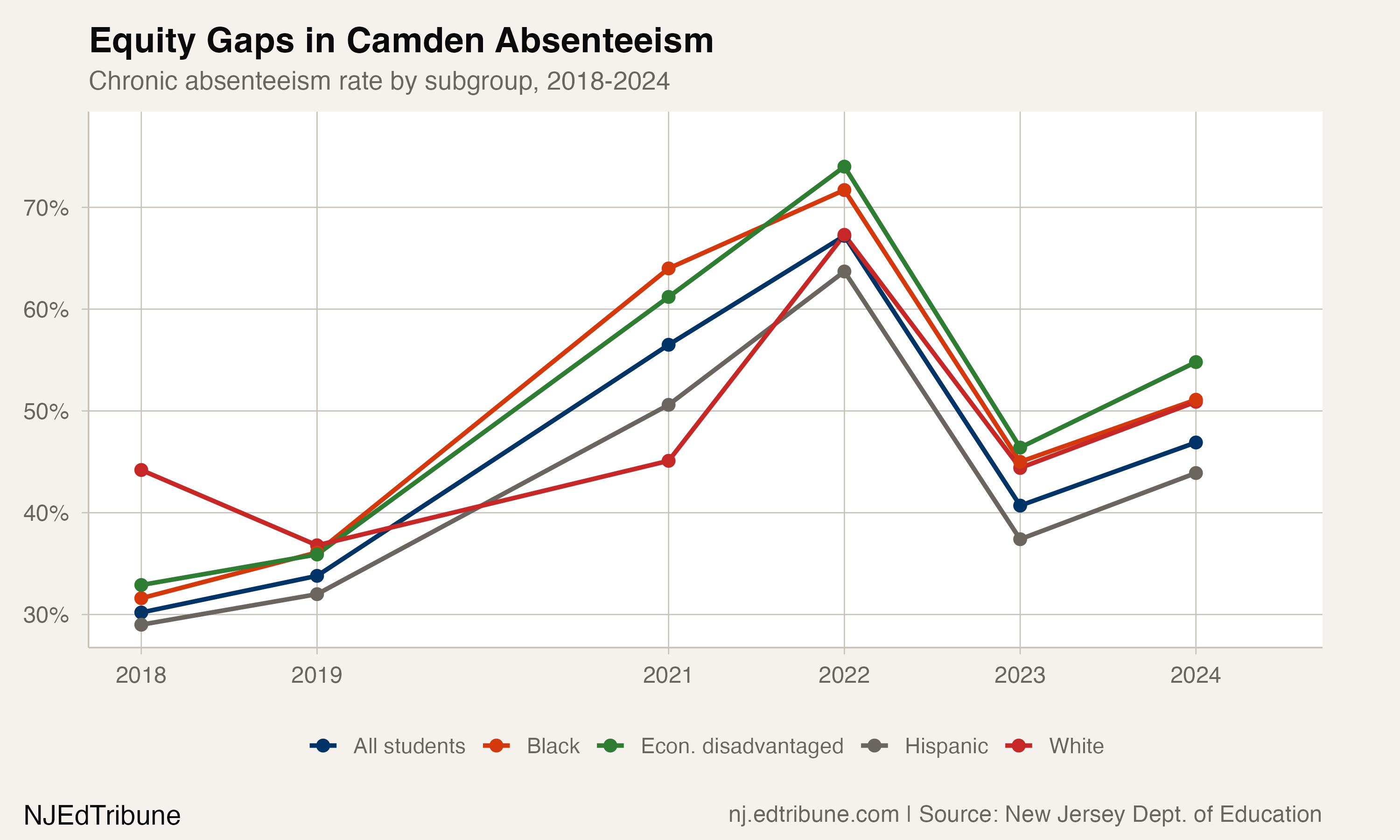
Nearly half of Camden students are chronically absent after a post-pandemic recovery stalled and reversed in 2024, widening the gap with New Jersey's statewide rate.
Twelfth-grade chronic absenteeism averages 20.3% across NJ schools, 8.3 points higher than 3rd grade, but seniors have recovered faster from COVID than any other grade.