Absence
South Jersey's Attendance Gap With the North Has Nearly Doubled Since the Pandemic
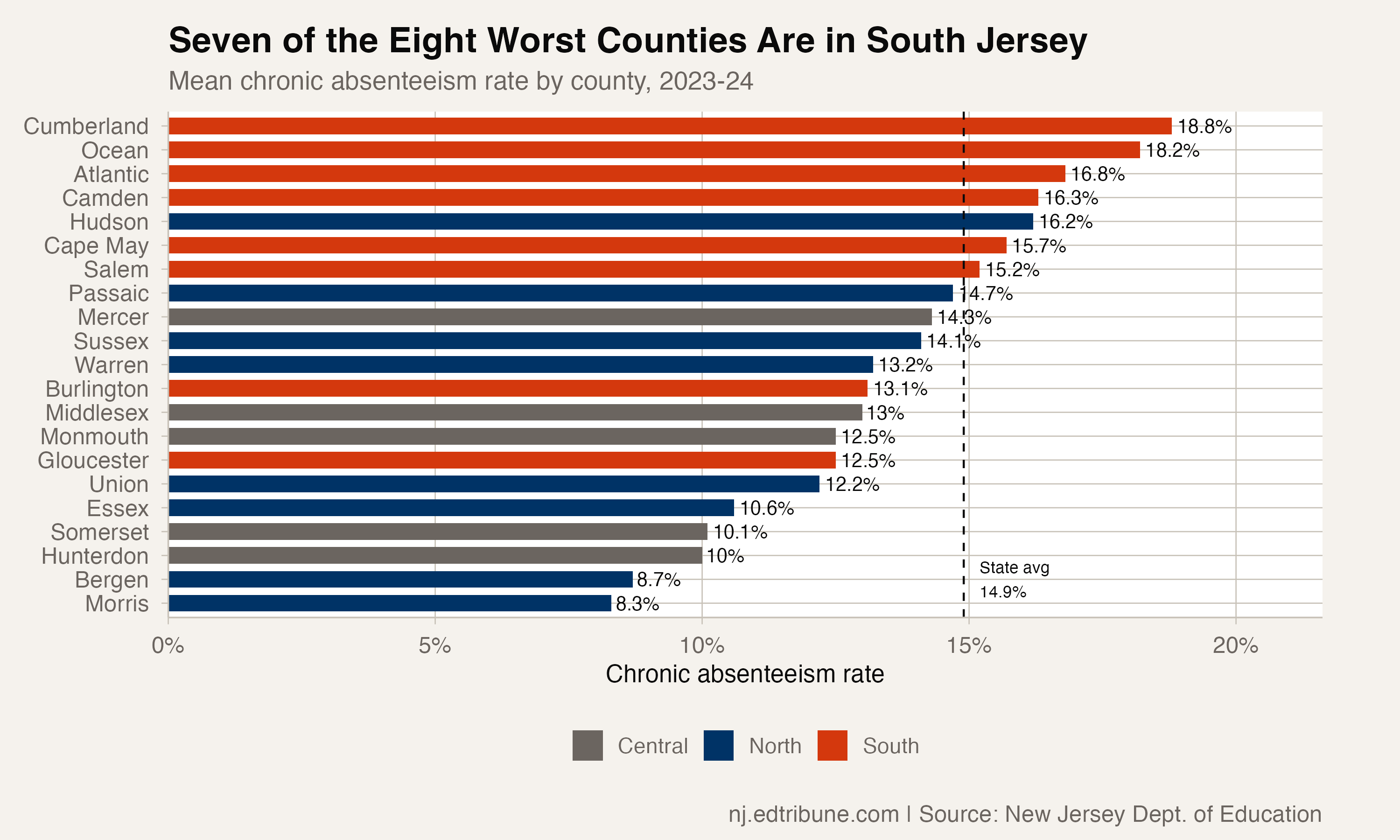
South Jersey districts average 15.6% chronic absenteeism vs 11.1% in the north, a 4.5 pp gap that was only 2.4 pp pre-COVID.
Data-Driven Education Journalism for the Garden State
Page 2 of 2
South Jersey districts average 15.6% chronic absenteeism vs 11.1% in the north, a 4.5 pp gap that was only 2.4 pp pre-COVID.
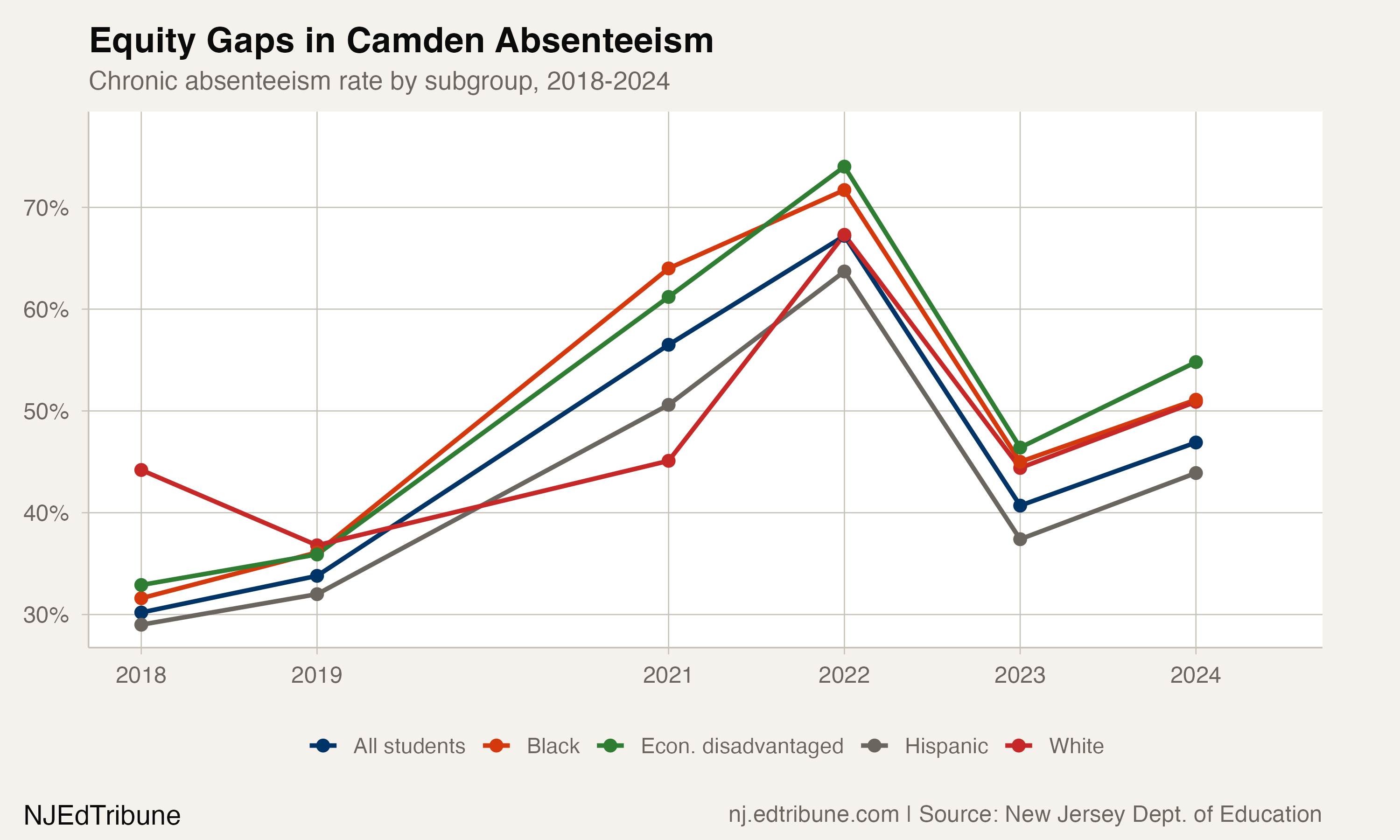
Nearly half of Camden students are chronically absent after a post-pandemic recovery stalled and reversed in 2024, widening the gap with New Jersey's statewide rate.
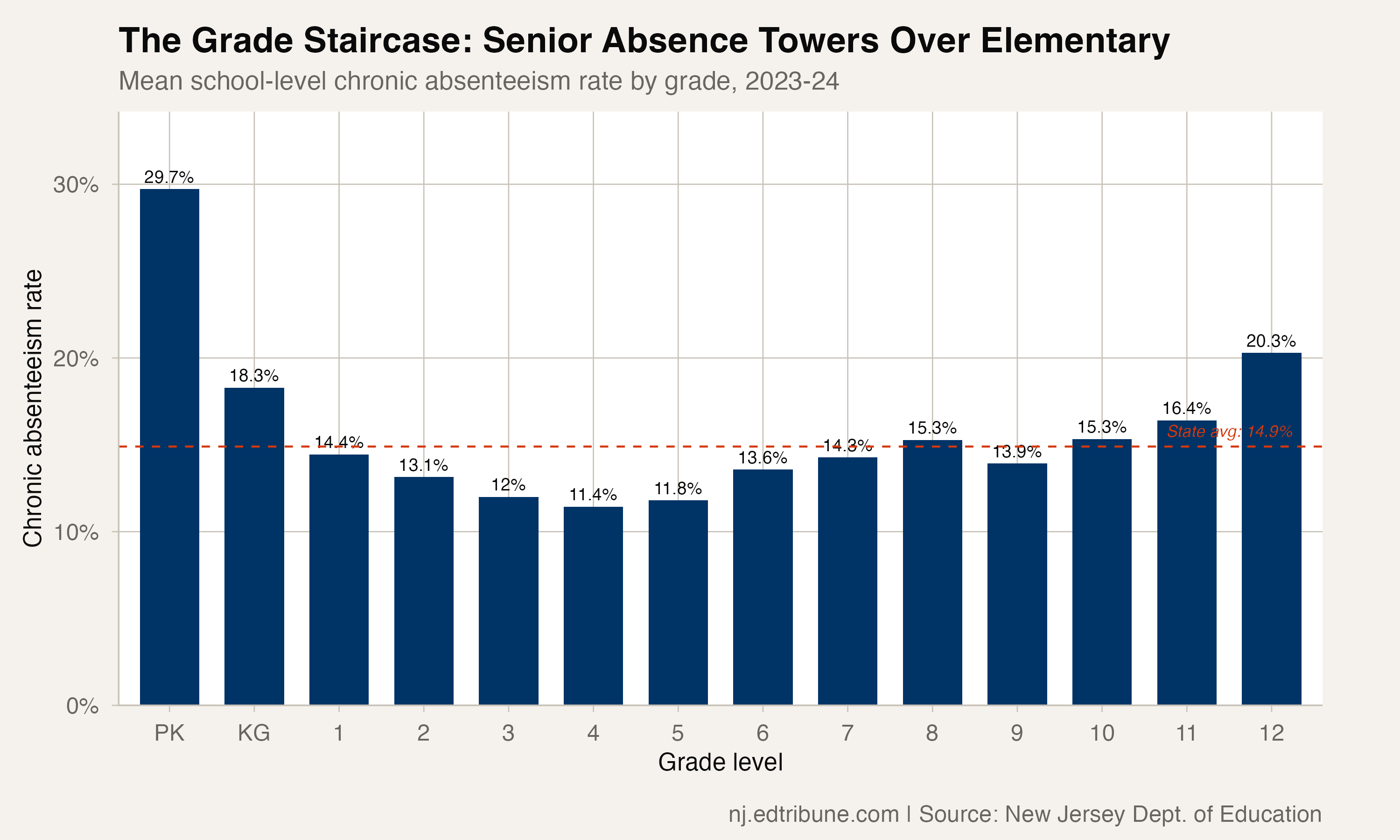
Twelfth-grade chronic absenteeism averages 20.3% across NJ schools, 8.3 points higher than 3rd grade, but seniors have recovered faster from COVID than any other grade.
Black, economically disadvantaged, and disabled students all hit 21% chronic absenteeism in NJ, converging from different peaks.
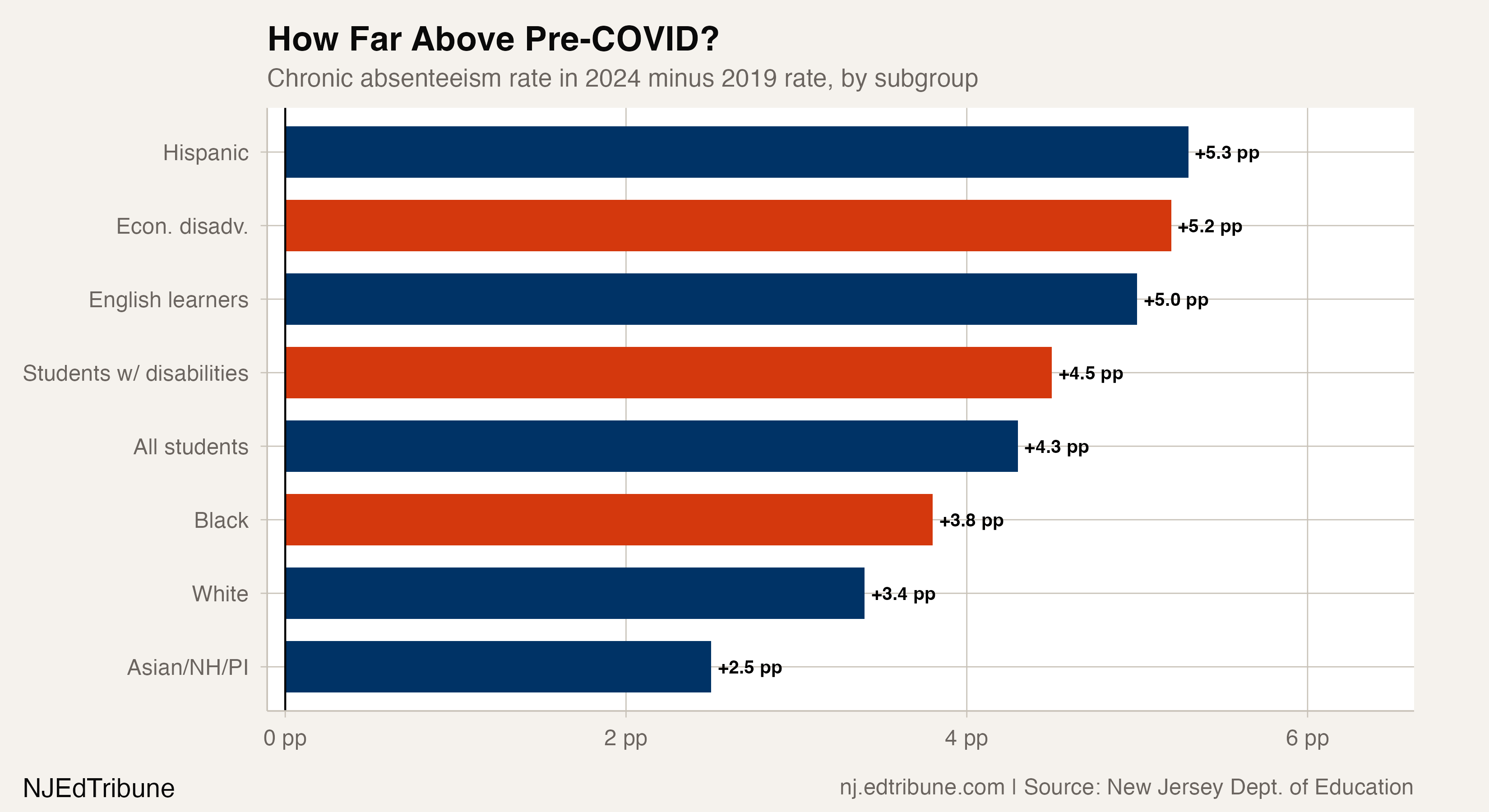
NJ charter districts average 16.7% chronic absenteeism vs. 12.8% for traditional districts, but half of all charters beat the state average.
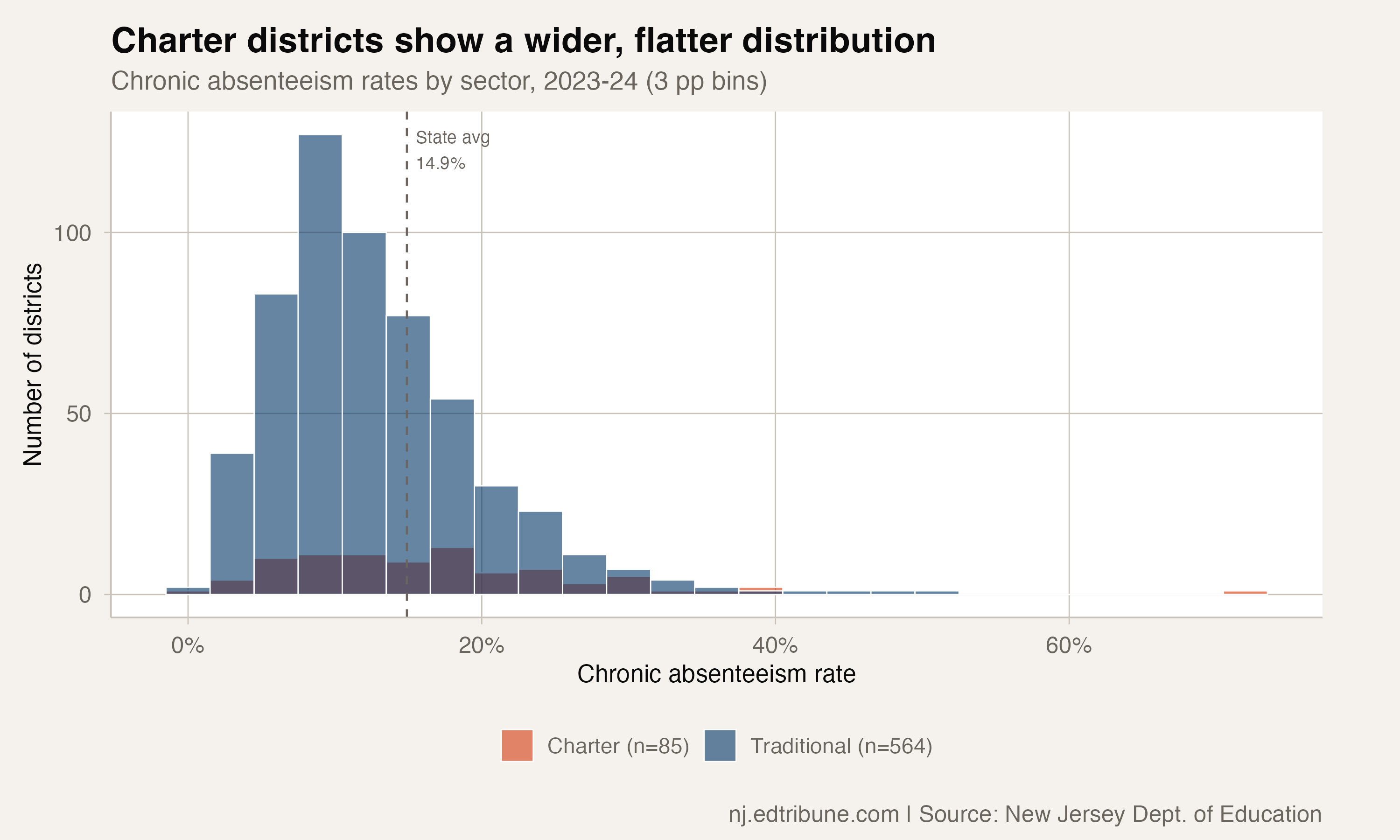
Newark's chronic absenteeism dropped from 26.8% to 11.5%, falling below the state average while 87% of NJ districts remain above pre-COVID levels.
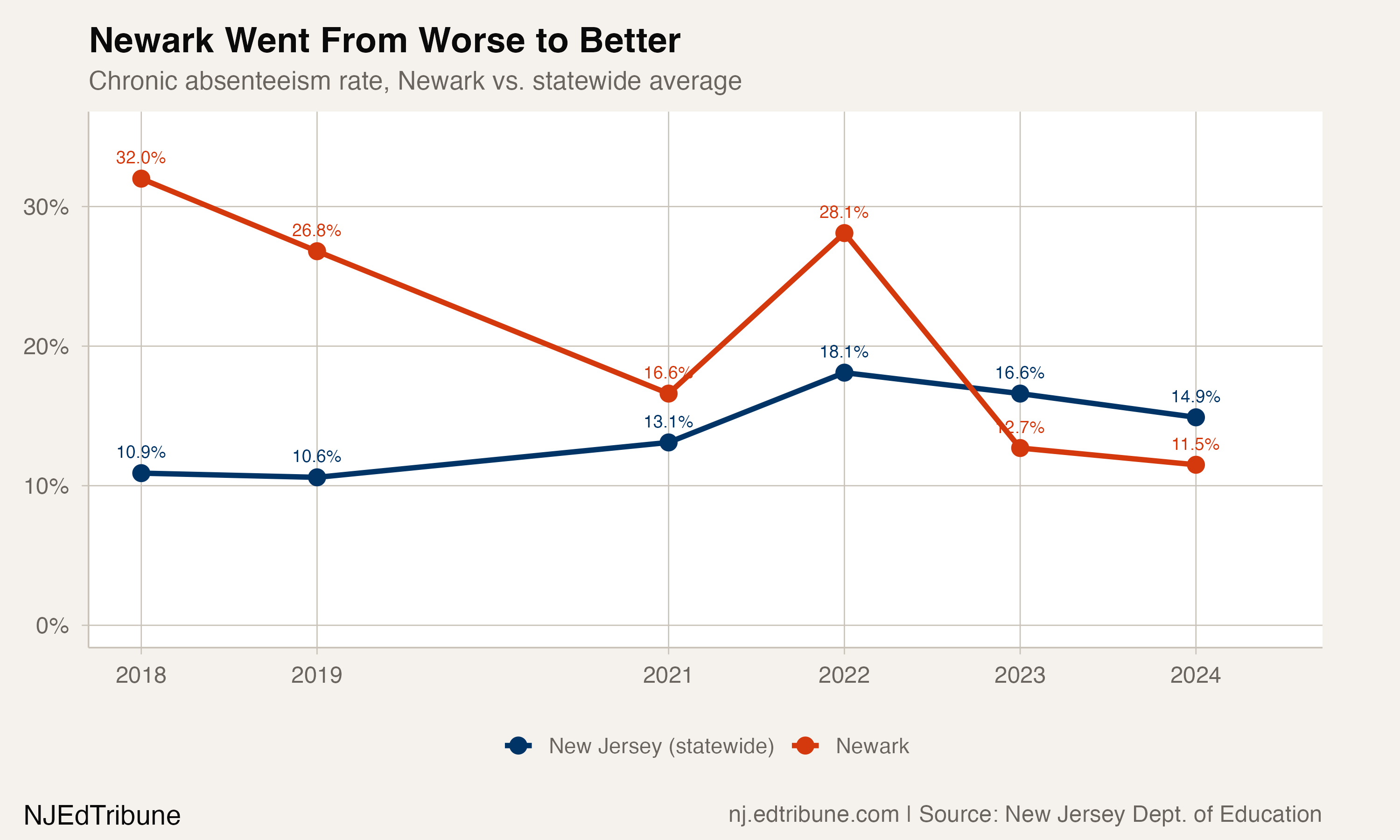
Black chronic absenteeism in Paterson hit 45.9% in 2023-24, still 10.7 points above pre-COVID levels and 4x the statewide white rate.
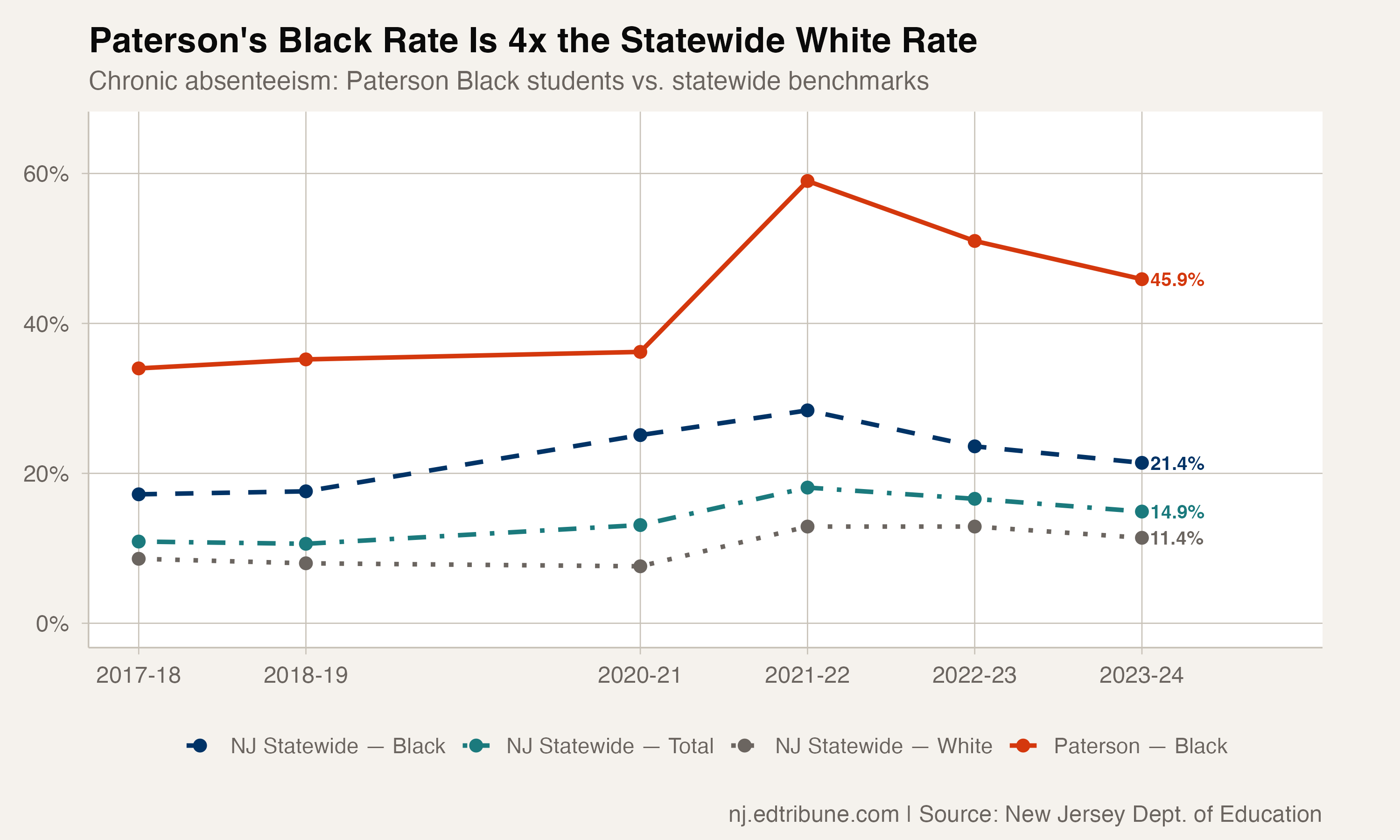
New Jersey's chronic absenteeism rate has improved since its 2022 peak, but just 12.9% of districts have returned to pre-pandemic levels. The gap is widest in urban districts.
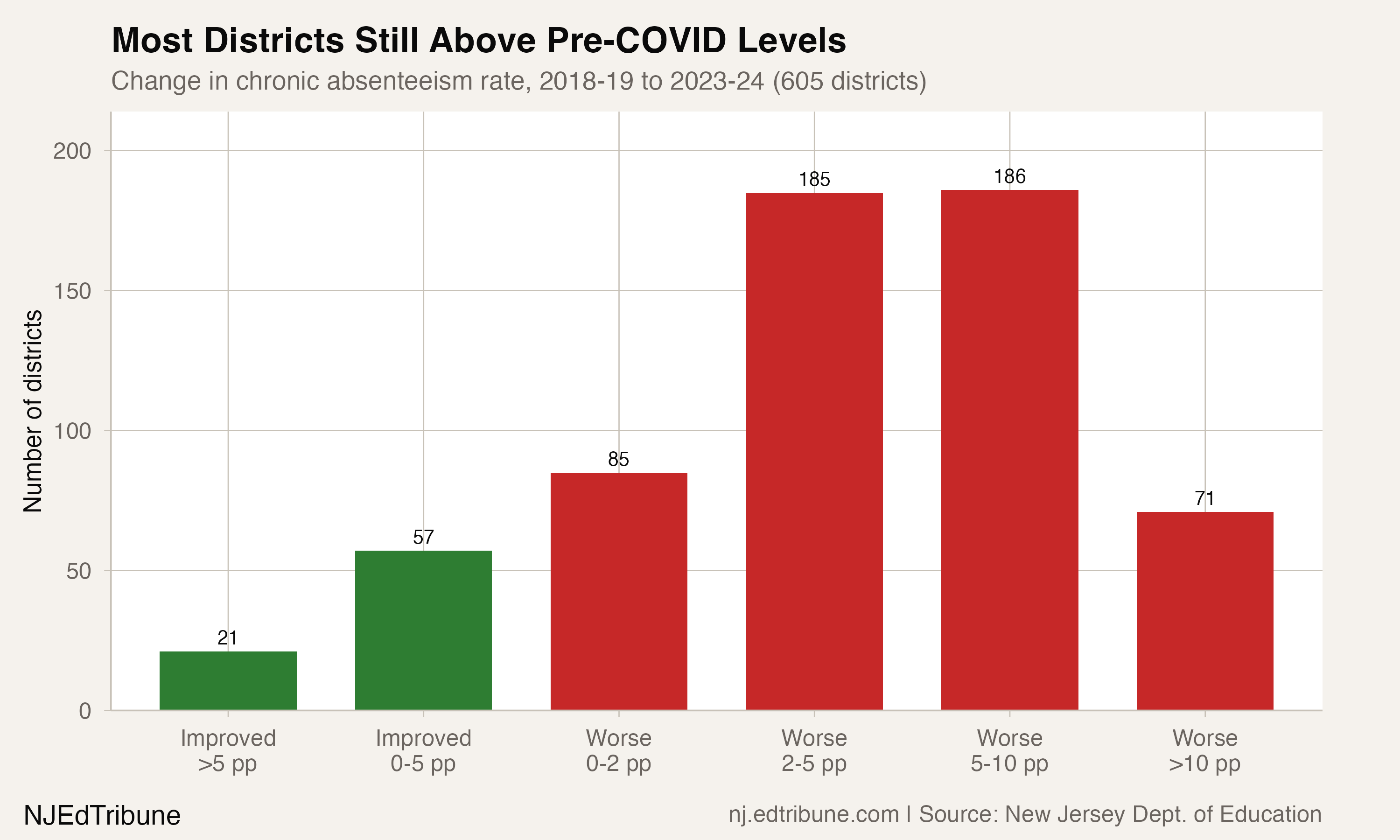
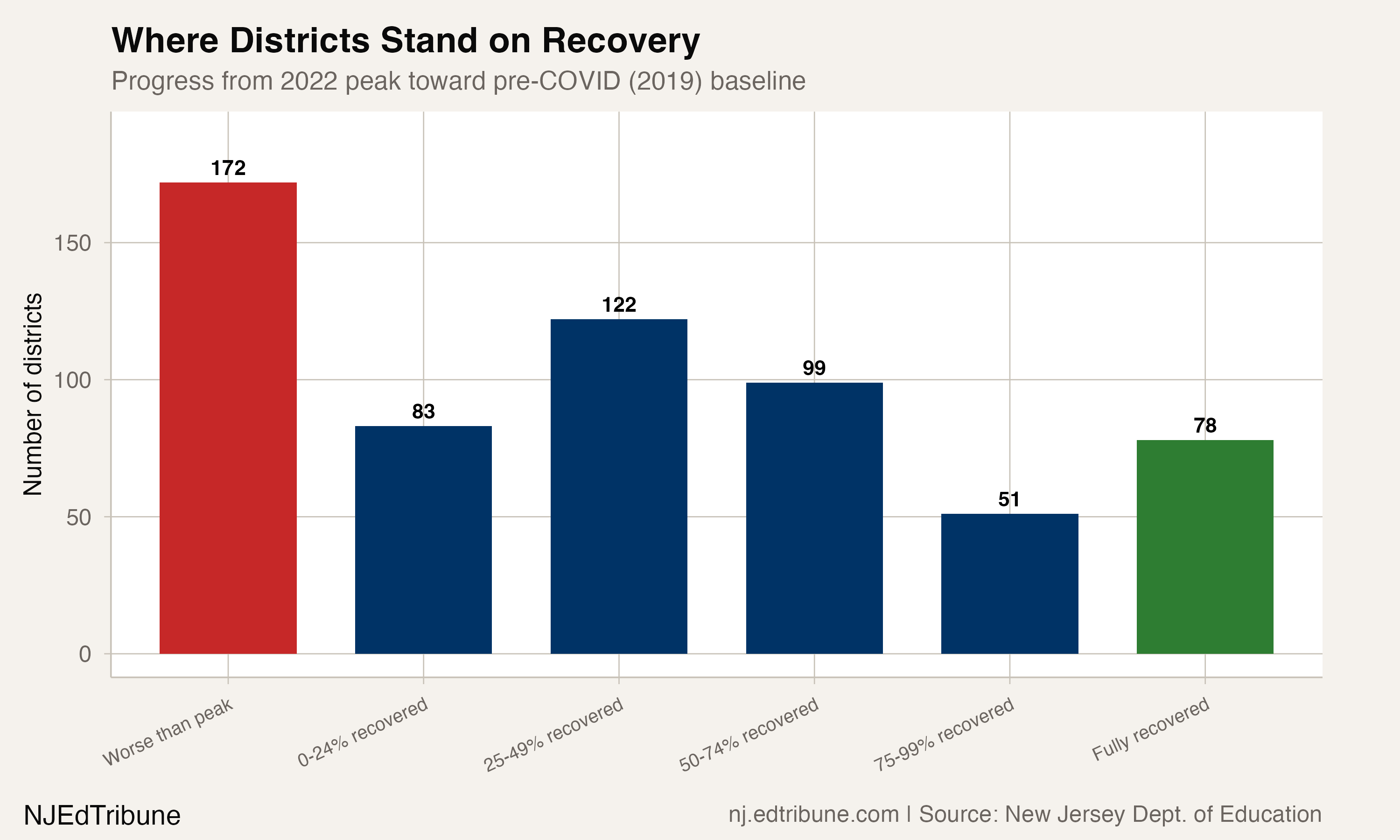
NJ chronic absenteeism dropped from 18.1% to 14.9% since 2022, but 172 districts are worse than their pandemic peak and 47 keep getting worse every year.
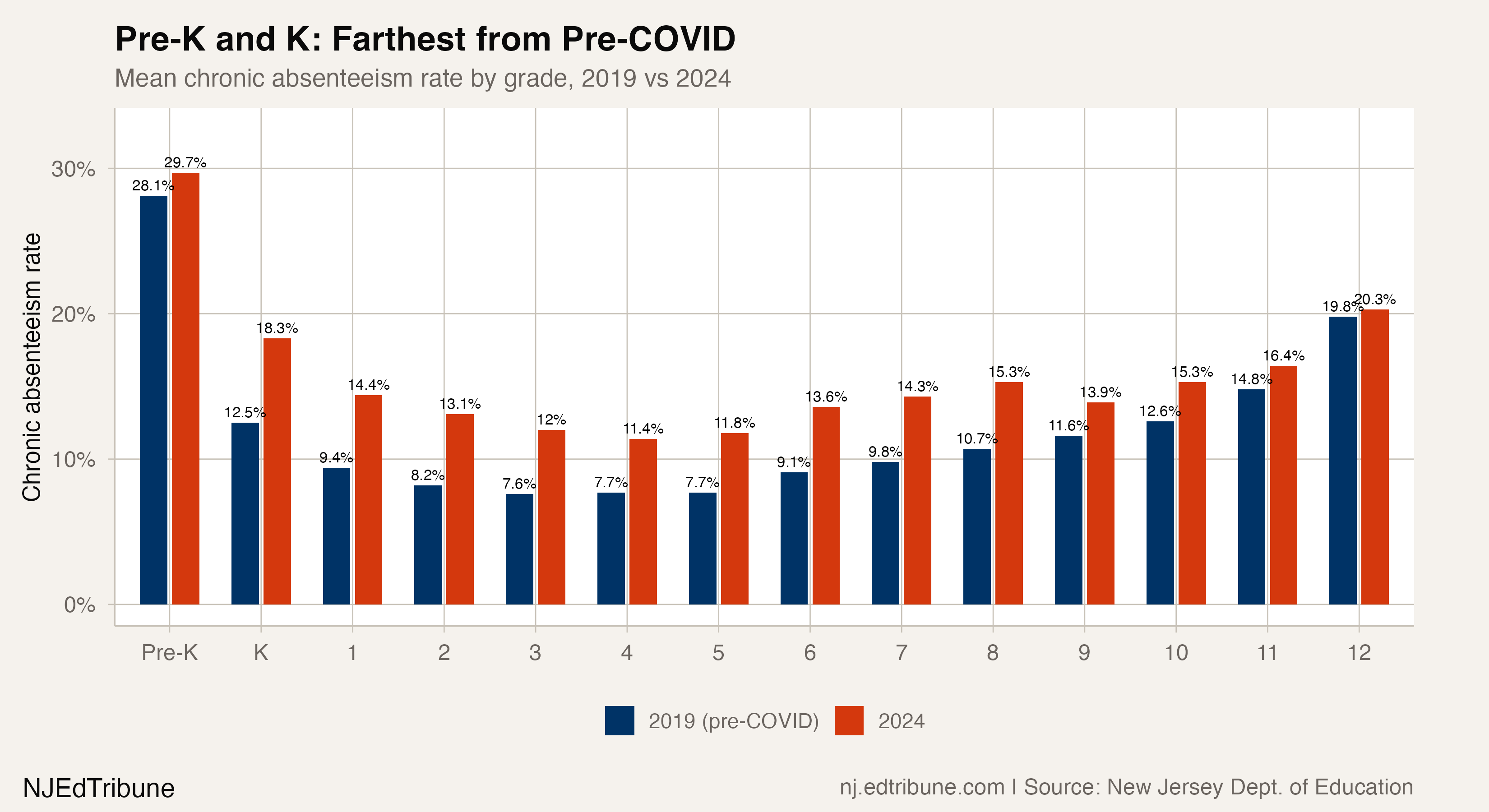
COVID pushed NJ kindergarten chronic absenteeism past high school. Two years later, K is still 5.8 points above baseline while high school nearly back.